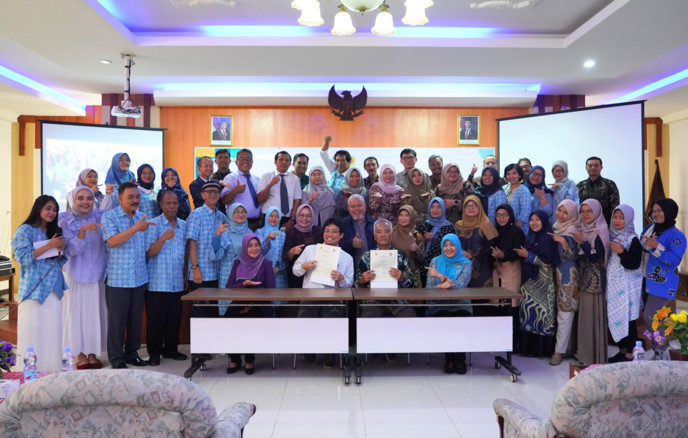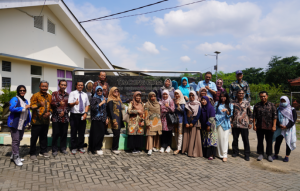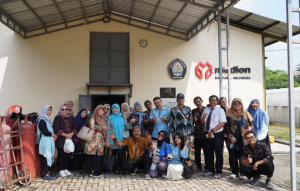
The Center for Indonesian Policy Studys (CIPS) held a discussion forum entitled “FromFields to Policy: Raising the Voice of Farmers for a Just Rural Transition” which was heldon Wednesday (11/3/2026), at the Ngurensiti Village Hall, Pati Regency. This activitypresented farmers, agricultural extension workers, local governments, academics, researchersfrom the Center for Indonesian Policy Studies (CIPS) and other stakeholders in one dialoguespace to strengthen the position of farmers as the main actors in agricultural development.
The Center for Indonesian Policy Studies (CIPS) is an independent, non-profit, non-partisan think tank that advocates for practical policy reform informed by evidence-based policy research and analysis.
This activity is a strategic dialogue space that brings together farmers, academics, agricultural extension workers, local governments, and various stakeholders in order to strengthen the role of farmers as the main subject in agricultural development.
Dr. Tutik Dalmiyatun is present as an academic who has an interest in the issue of community empowerment and participation-based agricultural development. In this activity, he was actively involved in thematic discussion sessions that discussed various challenges faced by farmers, ranging from limited access to agricultural inputs, climate change risks, to the sustainability of farmers‘ livelihoods.
In the forum, Dr. Tutik Dalmiyatun emphasized the importance of a paradigm shift in looking at the role of farmers in agricultural policy.
“Farmers should not only be positioned as beneficiaries, but as subjects who have valuable knowledge and experience in formulating agricultural policies that are more contextual and have a direct impact on farmers,” said Dr. Tutik.
The discussion also raised various strategic issues faced by farmers, such as limited access to agricultural inputs, climate change risks, and environmental sustainability challenges that occurred in Pati Regency. This activity also presents an innovative approach through thephotovoice method, where farmers convey their experiences and perspectives through visual media (photos) that depict the realities of life and challenges on the ground.
Through the photovoice approach, farmers are given the space to convey their experiences directly through visuals that represent real conditions in the field. This method is considered to be able to bridge the gap between the empirical experience of farmers and policy formulation which has tended to be top-down.
According to Dr. Tutik, this participatory approach is an important step in bridging the gap between policies and farmers‘ realities.
“A participation-based approach is able to present farmers’ voices more authentically. This is an important basis in creating policies that are not only on target, but also sustainable,” he added.
In addition, this activity also involved representatives of Agribusiness students of Diponegoro University who actively participated in the discussion, namely Qaila Zahra, Agribusiness Student 2023 and Hanafi Agribusiness Student 2024. The presence of students is expected to strengthen the synergy between the academic world and field practice.
“Students must be able to be a bridge between science and the needs of society. Their involvement in forums like this will increase social sensitivity while enriching their perspectives,” explained Dr. Tutik.
This forum is an important forum for the exchange of ideas across actors and encourages collaboration in formulating agricultural development strategies that are more inclusive and responsive to the needs of farmers. With the implementation of this activity, it is hoped that the synergy between academics, farmers, and policy makers will be stronger in encouraging the transformation of agricultural development that is just and sustainable, as well as making the voice of farmers the main foundation in every policy formulation process at the local and national levels.